
Underwater-Image-Enhancement for biomass estimation in seaweed cultivation
Background
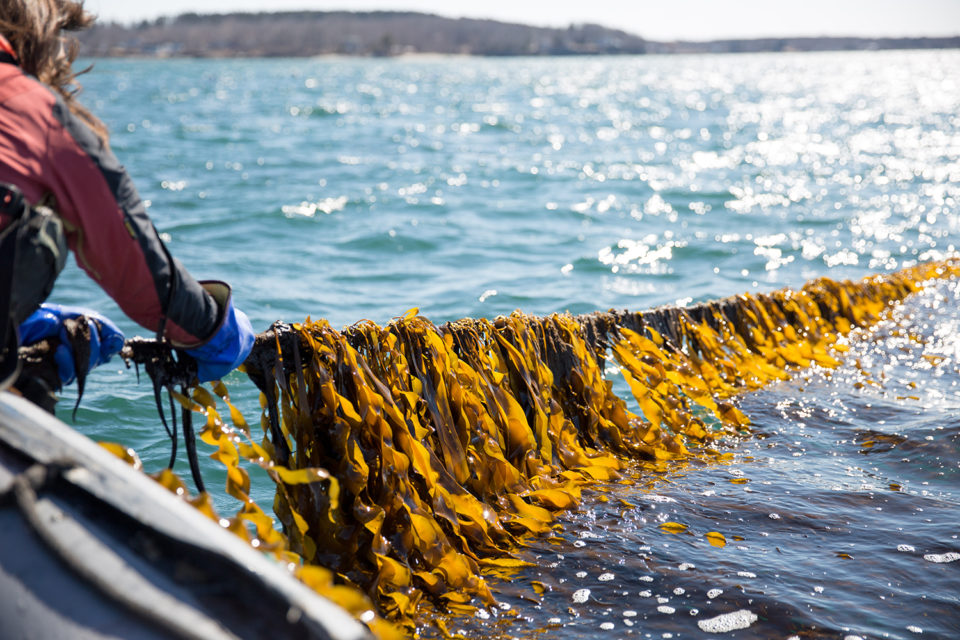
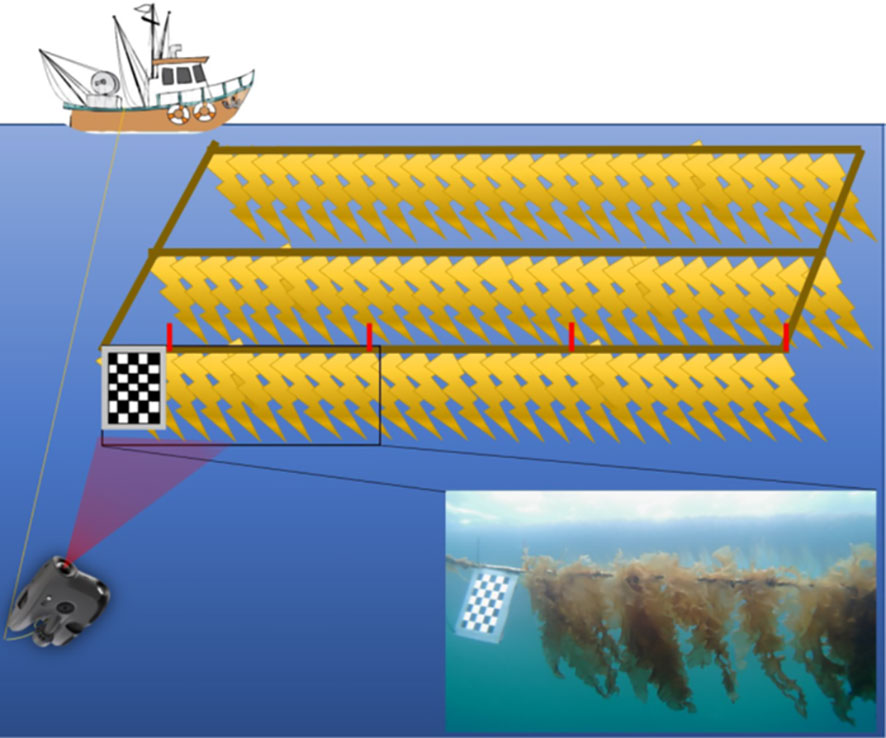
How much seaweed is growing on a farm? Cameras on underwater robots can answer this without harvesting the seaweed, but only as long as the water is clear. Recent work at NTNU (Overrein et al. 2024) estimated the biomass of cultivated kelp from RGB video recorded by a mini-ROV along a seaweed line at Frøya, mid-Norway, through the 2022 growth season (March to June). The image-based estimates matched the harvested biomass well, but the accuracy depended strongly on turbidity and chlorophyll concentration in the water: when the last sampling day, with poor visibility, was left out, the fit improved markedly. In other words, the method is least reliable late in the season, as the kelp approaches harvest.
This project aims to fix that, by making underwater images comparable across seasons and locations. By combining AI-powered computer vision with autonomous robotics, it contributes to sustainable food production from the ocean, as part of the RI SEAWEED project. Depending on progress, field trials with autonomous vessels in Norwegian fjords are possible.
See also the related proposal on steering a robot boat for hyperspectral imaging of seaweed farms.
| Farmed seaweed, source | Seaweed farm, Overrein et al. (2024) |
|---|---|
 |
 |
Scope
There are several challenges with using cameras under water, such as light attenuation, color distortion, and scattering from particles in the water, making the images blurry with a low signal-to-noise ratio. These challenges make it difficult to obtain high-quality images for assessing seaweed health and growth. These factors also vary greatly with the season and environment (light and amount of particles in the water), making it difficult to compare data from different locations and times of the year, and essentially limiting the usability of camera data for biomass estimation in seaweed farms.
Fortunately, new results within underwater image enhancement, using both deep learning and more classical techniques, have shown promising results in improving the quality of underwater images. These techniques can help mitigate the effects of light attenuation and scattering, leading to clearer and more detailed images that are better suited for analysis.
| Example underwater image enhancement, source |
|---|
 |
Proposed tasks
The tasks will vary based on the focus of the project, as decided by the student (you) and the supervisor (me), but the below steps are common:
- Familiarize with the state-of-the-art within seaweed farming, both from the industry and literature
- Perform a literature review of the state-of-the-art methods within underwater image enhancement, see e.g. CXH-Research/Underwater-Image-Enhancement: Summary of Publicly Available Underwater Image Enhancement Method, fansuregrin/Awesome-UIE: Awesome Underwater Image Enhancement (UIE) Methods, and YuZhao1999/UIE: This is a resouce list for underwater image enhancement
- Compare the performance, computational load and payload requirements of the most promising methods using an existing dataset, such as the mini-ROV video from Overrein et al. (2024). The goal is to reduce the impact of seasonal variations on existing seaweed biomass estimation methods.
- Exciting extensions could include:
- Train custom neural networks for biomass estimation
- Deploy models on edge devices for real-time processing
- Field trials with autonomous vessels in Norwegian fjords
- Discuss the results with a critical eye, and conclude the work in a written report
Who We Are Looking For
You are interested in computer vision and machine learning, and want to apply them to a real problem where the data are messy and the conditions change with the seasons. Experience with Python and a deep-learning framework (e.g. PyTorch) is an advantage, as is a background in image processing or robotic vision. Interest in marine robotics or aquaculture is a plus, but not a requirement.
When you contact us, briefly describe a project (from a course, a hobby or a job) that you are proud of, preferably one involving images or machine learning.
What you will learn
This project offers hands-on experience with cutting-edge technologies at the intersection of AI, robotics, and marine biology. Depending on your background and interests, you will develop skills in:
- Deep learning for computer vision: Work with state-of-the-art neural network architectures (CNNs, GANs, Transformers) for underwater image enhancement
- AI model evaluation and deployment: Compare different methods based on performance, computational efficiency, and real-world applicability
- Robotic vision systems: Apply computer vision techniques to solve real-world challenges in challenging underwater environments
- Autonomous systems: Potential exposure to autonomous surface vessels, sensor integration, and maritime robotics
- Research methodology: Literature review, experimental design, critical analysis, and scientific writing
No prior expertise in all areas is expected—your interests will help shape the project focus.
Contact
Contact supervisor Kristoffer Gryte, or co-supervisor Morten Alver
References
Overrein, Martin Molberg, Phil Tinn, David Aldridge, Geir Johnsen, and Glaucia M Fragoso. 2024. “Biomass Estimations of Cultivated Kelp Using Underwater RGB Images from a mini-ROV and Computer Vision Approaches.” Frontiers in Marine Science 11: 1324075.